The scalp: what we never look at (and yet it decides everything)
· 6 min read
The scalp is living skin, where all your hair is born and grows. The hair itself feels nothing. Taking care of your scalp therefore means taking care of your hair at the source: if your hair is not doing well, that is almost always where it all plays out.
Why does hair feel nothing, while the scalp can hurt?
You have probably noticed this already. When someone pulls your hair, it hurts. When someone cuts it, you feel absolutely nothing.
Hair, the part we comb, straighten, colour and pamper with masks, feels nothing. It is compacted keratin, a sort of growing nail, except that it hangs down.
Life is underneath, in the area we never look at, never light up in the mirror and almost never massage (or maybe once in July, in a Thai massage parlour in Belleville, on the pretext of being on holiday). That area is the scalp.
Is the scalp skin like any other?
In French, the word for scalp, "cuir chevelu", literally means "hairy leather", which sounds a bit like upholstery. Yet it is skin, living, fragile and temperamental, just like the skin on your face. Except we ask much more of it and give it much less.
On the face, we moisturise, tone, protect from the sun and get excited about a new texture. On the scalp? We pour on a shampoo bought on special offer, scrub vigorously and rinse with very hot water. We have all done it. The point is not to beat ourselves up, just to do things differently.
What does the scalp contain?
Your scalp has about 100,000 to 150,000 hair follicles in total. It also has:
- some of the most numerous sebaceous glands in the body;
- sweat glands;
- nerve endings, which is why it hurts when your hair is pulled;
- a microbiome all of its own, your personal skin flora;
- a slightly acidic pH, around 4.5 to 5.5.
pH matters a great deal when choosing a shampoo. We explain why in our article on the importance of pH for the scalp.
It is inside each of these follicles that a hair is born, grows, rests, then falls out to make way for the next one. The density, quality, shine and hold of your hair therefore depend on what you never see in the mirror.
Why do we forget to take care of our scalp?
Because we cannot see it. It is as simple as that.
The mirror shows us our lengths, our ends, our roots growing back (always too fast). Never the real state of what is happening underneath. So we treat what we can see, and neglect what does the producing.
It is like watering the leaves of a plant without ever checking the soil in the pot. At first, it works. After a few months, you wonder why nothing is going right any more.
What signals does an unbalanced scalp send?
Your scalp is very talkative. The problem is that we do not speak the same language. A short translation guide:
- Itching: "Something is throwing me off balance. The shampoo, stress, hard water, or all three."
- Dry flakes that cling: "I am too dry. I am washed too often, or with a product that strips too harshly."
- Oily flakes, more yellow, more sticky: "My sebum is out of control, often because of a disrupted microbiome."
- Tightness after shampooing: "You attacked me. Really."
- Greasy hair the day after washing: "You wash me too often, and too hard. My sebaceous glands are compensating."
- Sudden hair loss, more than usual: "Stress, hormones, the season, or all three. Often temporary, but worth keeping an eye on."
- Fine, flat, limp hair: "My follicle is getting tired. We should talk."
None of these signals is trivial, and none is permanent. The scalp reacts quickly and rebalances well, as long as you listen to it. To go further, read our articles on dry or oily dandruff and on hair loss. If heavy hair loss, stubborn dandruff or irritation persists, see a dermatologist.
Which habits damage the scalp?
Without realising it, we put it through a lot:
- Water that is too hot, which dries, irritates and can kick-start sebum production.
- Very foamy, harsh shampoos: "it lathers a lot" does not mean "it cleans better".
- Washing too often: an irritated scalp produces more sebum, which makes you wash even more. It is a vicious circle.
- The hairdryer, too hot, too close, too often.
- Chronic stress, whose effects can show up in your hair two to three months later.
- Hairstyles that are too tight: pulled-back ponytails, tight buns. For the follicles, it is slow traction.
- Lack of massage. We never massage our scalp, and that is a shame.
This list is not here to make you feel guilty. Nobody does everything right, and nobody needs to fix everything at once.
How to take care of your scalp every day
No need to reorganise your bathroom tonight. Three small changes are often enough.
1. Turn down the water temperature
Lukewarm, not hot. Your lengths will thank you, and so will your scalp.
2. Massage while you shampoo
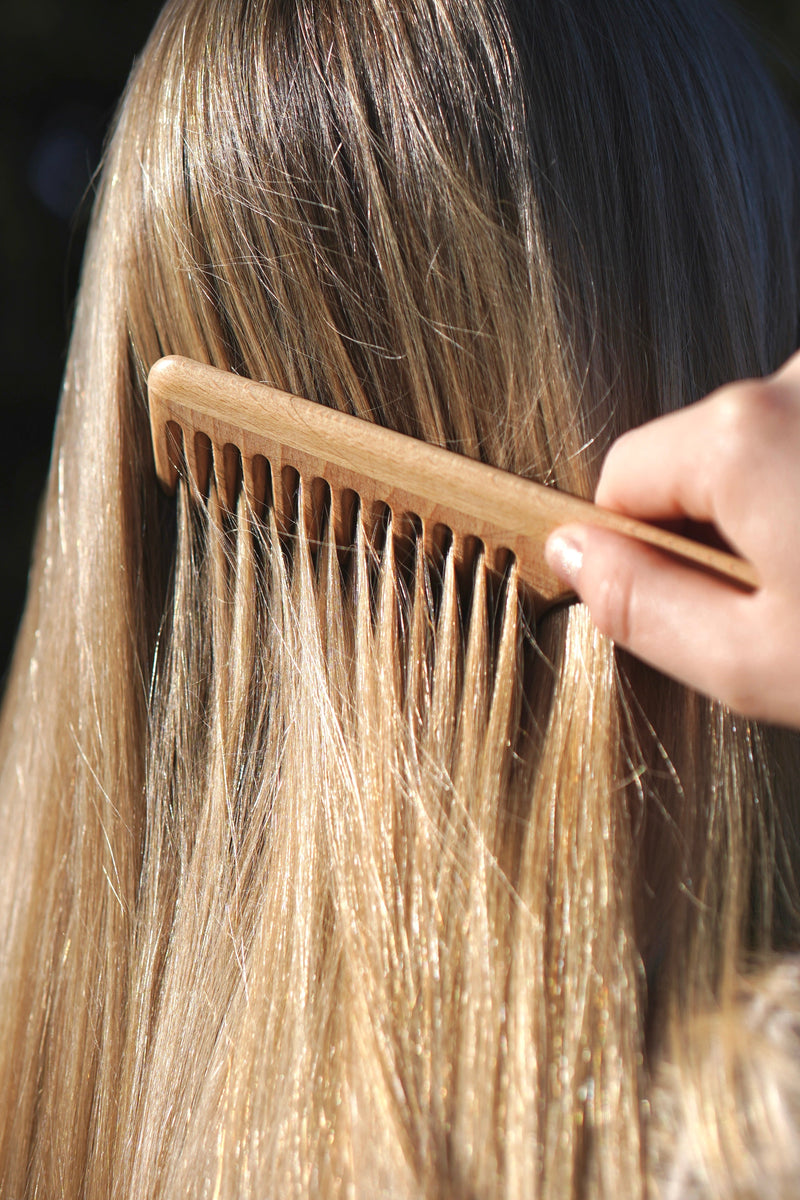
Massage stimulates microcirculation. Thirty seconds with your fingertips (not your nails), in slow circular movements. It is free, effective and rather pleasant. A wooden pin brush also massages the scalp every day.
3. Space out your washes, gently
There is no need to force yourself to last five days. Simply try one extra day, with a shampoo suited to your scalp type.
How to choose a shampoo for your scalp type
You choose your shampoo for your scalp, not for your lengths. If your roots are oily and your ends dry, use a shampoo for an oily scalp, and nourish the lengths separately. It is counter-intuitive, but that is how it works.
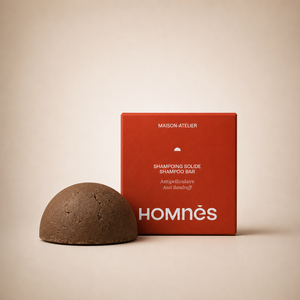
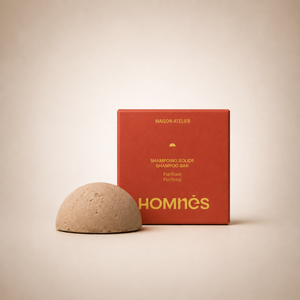
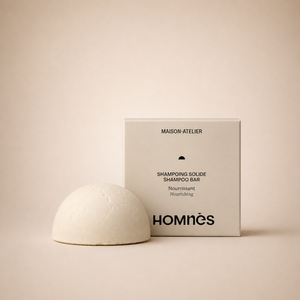
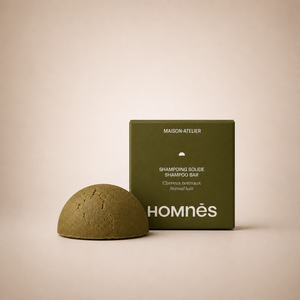
That is why the Homnès range is organised by scalp type: normal, dry (nourishing), oily (purifying), hair loss (anti-hair loss), dandruff (anti-dandruff). Our online hair diagnosis helps you find yours.
How does a scalp diagnosis work at Homnès?
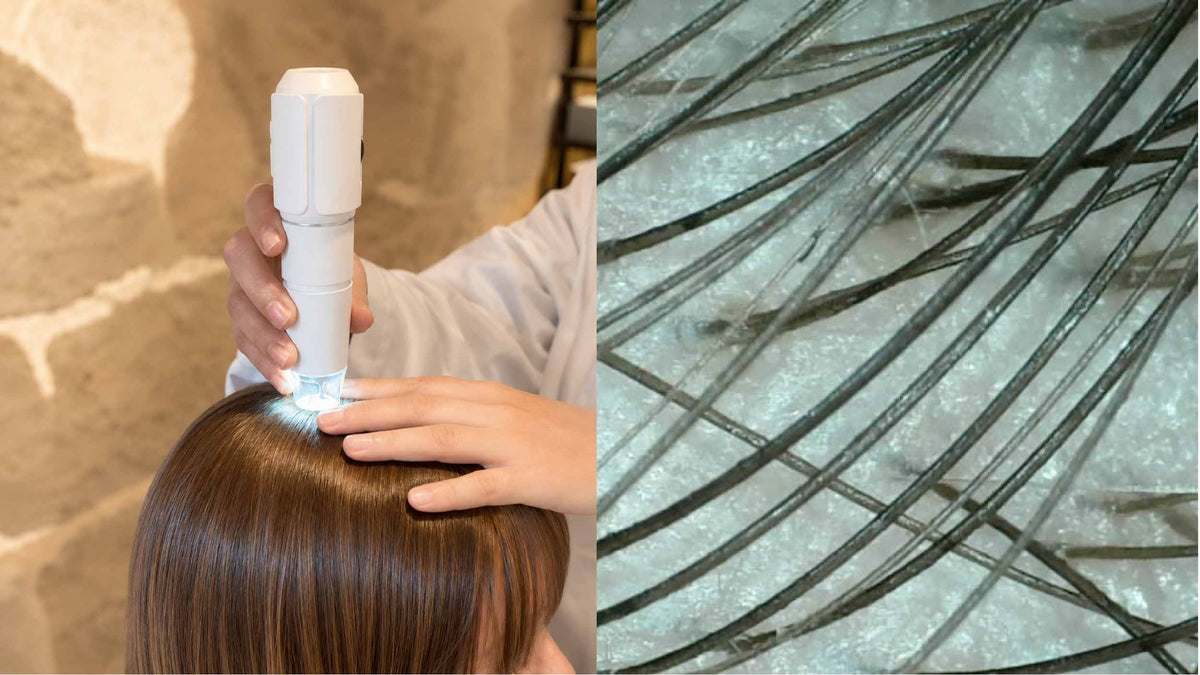
When our team welcomes you to the Maison-Atelier, on rue Charlemagne in the Marais, the first thing they look at is never the length of your hair. It is your scalp: its texture, its colour, how reactive it is, and what it says about your stress, your pace of life, the season.
You can give your lengths the finest treatments in the world: if the root is not listened to, the work never ends. The diagnosis is free, by appointment at the atelier.
Frequently asked questions
Should you moisturise your scalp?
A scalp that feels tight or flakes often needs a gentler wash. Start with a mild shampoo suited to dry scalps, and lukewarm water. Nourishing treatments are better kept for the lengths.
How long does it take to rebalance a scalp?
It depends on the person. It usually takes several weeks of regular habits to see a difference. If nothing changes, or if symptoms get worse, ask a dermatologist for advice.
In short
- Hair is inert; the scalp is living skin where everything is produced.
- Itching, dandruff, oily roots or hair loss are signals worth listening to.
- Lukewarm water, a fingertip massage, fewer washes: three simple habits.
- Choose your shampoo for your scalp, not for your lengths.
Next time you walk past a mirror, look at your roots, not your lengths. The scalp is a bit like fertile soil: if you look after it well, everything that grows above it ends up doing better. Rather reassuring, isn't it?