
Dry or oily dandruff? Identifying the right treatment
Dry or oily dandruff? Dry flakes are fine and white and fall onto your shoulders; oily flakes are larger, yellowish and stick to the scalp. The two have neither the same causes nor the same treatment, and getting the category wrong can make the problem worse. Here is how to recognise them and choose the right habits.
Where does dandruff come from?
About one person in two has dandruff at some point in their life. It is linked to a fungus naturally present on the scalp, Malassezia, which multiplies when the scalp's balance is disrupted. Skin cells then renew too quickly and come away as visible flakes.
How can you tell whether you have dry or oily dandruff?
Dry dandruff
- Fine, white, loosely attached flakes.
- They fall onto your shoulders as soon as you brush or move your head.
- The scalp is often dry, feels tight and may itch slightly.
Oily dandruff
- Larger, yellowish flakes.
- They stick to the scalp or the base of the hair.
- The scalp is oily, sometimes red, and the itching is more pronounced.
Oily dandruff is the most common form in cases of seborrhoeic dermatitis.
What causes each type of dandruff?
Dry dandruff:
- dry air (heating in winter, air conditioning);
- shampoos that strip too harshly or are used too often;
- hard water;
- stress.
Oily dandruff:
- excess sebum;
- hormonal changes;
- an unbalanced diet (sugar, saturated fats);
- a tendency to seborrhoeic dermatitis.
How to treat dry dandruff
- Space out your washes: 2 to 3 times a week is enough.
- Use a gentle, sulfate-free shampoo with a pH close to that of the scalp. To understand why, read our article on scalp pH.
- Once a week, apply an oil treatment (jojoba, argan) to your scalp and leave it on for 30 minutes before shampooing.
- Rinse with lukewarm water, never hot.
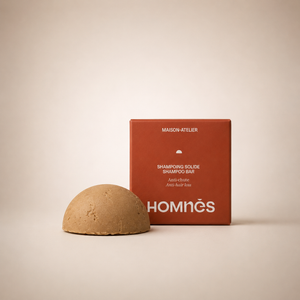
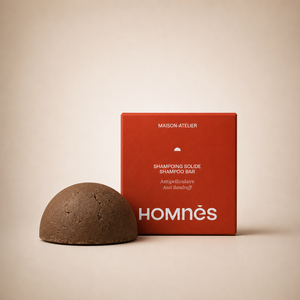
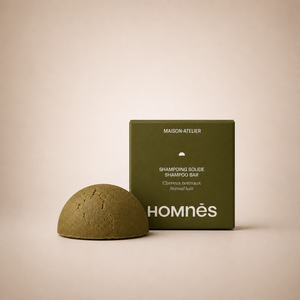
Our anti-dandruff solid shampoo with shikakai removes dandruff, helps prevent it from coming back and soothes itching.
How to treat oily dandruff
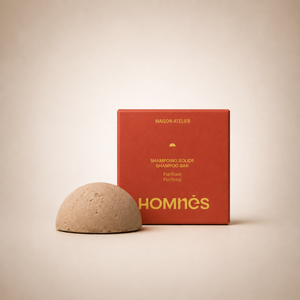
- Choose a purifying shampoo with clay or with birch, nettle or rosemary extracts. Our purifying solid shampoo with rhassoul, a clay, regulates sebum.
- Avoid washing too much: 3 times a week at most.
- Strictly avoid greasy styling products near the roots.
- Cut down on sugar and saturated fats in your diet during flare-ups.
When should you switch to a pharmacy anti-dandruff shampoo?
If dandruff persists after 4 to 6 weeks of a suitable routine, or if it comes with redness and patches, a pharmacy shampoo containing zinc pyrithione, ciclopirox olamine or ketoconazole may be needed. It is generally used twice a week for 4 weeks. Ask your pharmacist for advice, and see a dermatologist if symptoms persist or spread.
What to avoid
- Scratching: micro-lesions encourage the fungus to multiply.
- Undiluted essential oils, which are often irritating.
- Bicarbonate of soda and concentrated cider vinegar: these so-called natural tricks upset the scalp's pH and often make things worse.
Frequently asked questions
Can you have both dandruff and oily hair?
Yes, it is even typical of oily dandruff: excess sebum feeds Malassezia. In this case, choose a purifying shampoo and avoid washing more often.
Is dandruff contagious?
No, it cannot be passed on. Malassezia is naturally present on everyone's scalp, and dandruff appears when the scalp's balance is thrown off.
How do I know which type of dandruff I have?
To identify your type of dandruff and the right routine, take our online hair diagnosis in 2 minutes. You can also come and have your scalp examined during a free diagnosis at the atelier, in the Marais.