
The steps in making a Homnès soap
· 3 min read
Making soap takes both creativity and technical rigour.
A Homnès soap goes through five steps: selecting the ingredients, preparing the base, adding the fragrance, moulding with a long drying period, then cutting, checking and packaging. Our silk protein soaps are cold processed, in small batches, in our Maison-Atelier in Paris. Here is how they come to life, from the formula to your bathroom.
Step 1: how do we choose a soap's ingredients?
It all starts with a careful selection of ingredients. Homnès favours natural, high-quality raw materials: organic plant oils, silk proteins, essential oils and plant extracts. Each one is chosen for its benefits for the skin and for its aromatic qualities.
Depending on the recipe, we also add clays, such as the blend of white and red clays in our rose soap, which softens and gently purifies.
Step 2: how do we prepare the soap base?
Once the ingredients are gathered, we prepare the base. The oils and butters are melted, then mixed with an alkaline solution, lye. A chemical reaction then takes place: the fats turn into soap and glycerin, a natural moisturising agent that stays in the soap.
What does "cold processed" mean?
Our soaps are cold processed: the mixture is not cooked. This gentle method helps preserve the benefits of the natural ingredients. In a well-formulated, well-cured soap, the lye has fully reacted with the oils.
What is a superfatted soap?
Our soaps are 6% superfatted: a small portion of the oils is deliberately left in excess in the recipe. It does not turn into soap and remains available to nourish the skin, which makes washing gentler.
Step 3: how do we fragrance a soap?
Fragrance is a key element of our soaps. The essential oils are carefully chosen, both for their properties for the skin and for their scent. Floral, woody or gourmand notes: each Homnès silk soap has its own signature, from rose to cedar and patchouli, by way of vanilla and aloe vera.
Step 4: why does soap need to dry for several weeks?
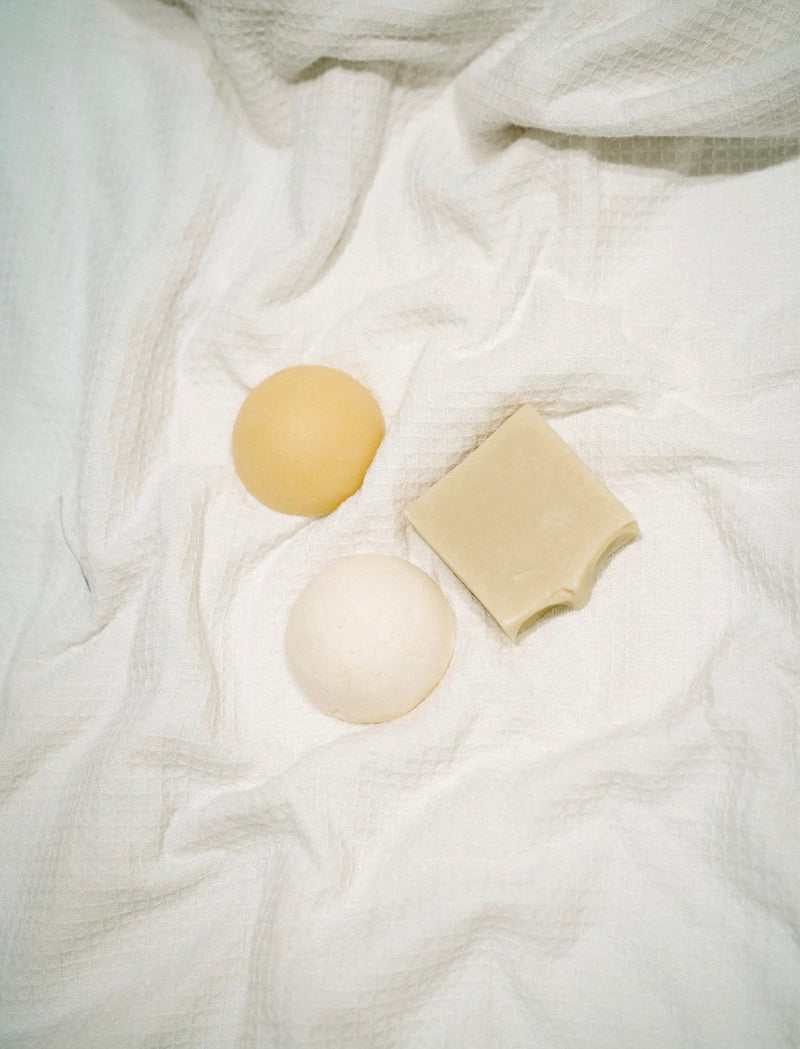
Once fragranced, the mixture is poured into moulds. After unmoulding, the soaps dry for 5 weeks. This maturing period, also called curing, lets them lose their moisture, harden and develop their fragrance and skin-care qualities. At Homnès, this step is essential: a well-cured soap is gentler and lasts longer.
Step 5: cutting, checking and packaging
Once they are firm, the soaps are cut into individual soaps. Each Homnès soap is unique and bears the mark of our know-how. They are then checked in our workshop laboratory: we test their pH and weigh them. Then they are carefully packaged, ready to reach you.
How to make your soap last
A cold processed soap likes to dry between uses. Keep it out of the water, on a holder that lets water drain away, or fix it to the wall with a magnetic soap holder. It will stay firm and last longer.
To choose the soap best suited to your skin, read How to choose the right soap. And to understand what silk brings to the skin, see Silk protein for luxury soaps.
At Homnès, we are proud to make soaps that care for your skin while awakening your senses. You can discover our Maison-Atelier at 5 rue Charlemagne, in the Marais, by booking an appointment.
In short
- Our silk protein soaps are cold processed, in small batches in Paris.
- They are 6% superfatted for gentler washing.
- They dry for 5 weeks before being cut.
- Every soap is checked (pH and weight) before being packaged.