It is hot, it turns oily, it itches: let's talk about it
· 4 min read
The heat rises, and your scalp reacts. (Sebum, itching, odor, dandruff: here is what is happening up there, and how to calm it without stripping everything.)
Summer, the gym, a packed metro, a bike helmet: as soon as it gets hot, the scalp sweats and produces more sebum. And then a few guests invite themselves in: oily roots, itching, sometimes an odor, sometimes dandruff. Nothing serious. But it is a terrain running ahead of itself, and a terrain is something you understand before you correct it.
Sweat smells (almost) like nothing, it is the terrain that talks
We often blame perspiration. Wrongly. Fresh sweat is nearly odorless. What smells is what lives on the scalp: a microbiome (bacteria, yeasts) that feeds on sebum and dead cells. As they digest all of it, these micro-organisms release volatile molecules. That is what we smell.
In other words: sebum is not the culprit, it is the fuel. The more of it there is, the more there is to feed that little world.
Why it turns oily faster
Heat stimulates the sebaceous glands: more sebum, faster. Add the humidity of perspiration and you get a warm, damp scalp, exactly the climate favored by the micro-organisms that live on it. The roots look oily by the next day, sometimes by the same evening.
Why it itches, why it smells
Three things combine:
• The yeast Malassezia feeds on the fats in sebum and turns them into compounds that can itch (it is the same yeast involved in oily dandruff: itching and flaking often travel together).
• Bacteria break sweat down into sulfur compounds and fatty acids: odor, the scalp version.
• Sebum that ages in contact with air oxidizes and takes on a slightly heavy, greasy smell.
And let us not forget: hair holds onto smells like a sponge (cooking, pollution, smoke). Sometimes “the smell of the scalp” is partly the smell the lengths picked up.
The trap: wanting to strip it all away
The reflex, when it turns oily: wash more, wash hard. That is exactly what you should not do. A stripped scalp feels attacked, and defends itself by producing even more sebum. You enter a circle where the more you strip, the oilier it gets.
The Homnès logic is the opposite: the scalp is the soil, the hair is the plant. You regulate the soil, you soothe it, you do not burn it.
What actually soothes
A few gestures, not a chore:
• Rinse with plain water after a workout or a spell of real heat, even without washing. It takes away sweat and fresh sebum before they ferment.
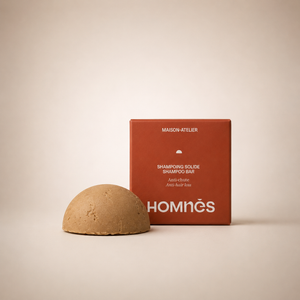
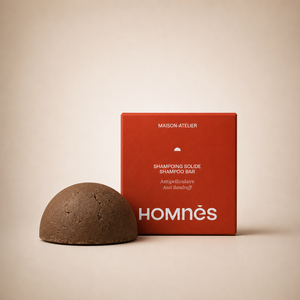
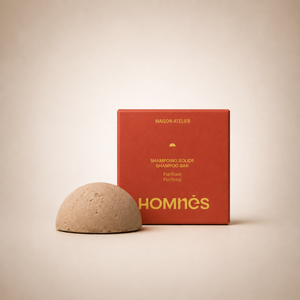
• Cleanse gently, without stripping, to regulate sebum and naturally space out washes: that is the role of the purifying care. If it itches and oily dandruff joins in, the anti-dandruff care soothes and regulates the terrain.
• Let it breathe: a scalp shut under a cap or a helmet heats up and stews. When you can, air it out; when you cannot, rinse afterward.
• Dry the roots before bed (a damp scalp at night means the terrain keeps working while you sleep).
The idea: regulate the fuel and soothe the terrain, rather than mask the odor or attack the fiber.
When it is no longer just a matter of heat
In short
Heat does not throw your scalp off to annoy you. It speeds up a terrain that was already there. You understand it, you regulate it gently, you soothe it, and summer becomes a season for you again, not for your roots.
A scalp that runs away with itself the moment it gets hot is precisely what a diagnosis at the atelier knows how to untangle. (Understanding comes first. The care comes after.)
Frequently asked questions
• Why does my scalp sweat and turn oily so fast when it is hot?
Heat stimulates the sebaceous glands and makes you perspire: more sebum, faster, on a warm and damp terrain. Cleansing gently, without stripping, helps regulate it.
• Why does my scalp smell bad?
It is not the sweat (nearly odorless), it is the microbiome feeding on sebum and releasing odor molecules. Regulating sebum reduces the odor at the source.
• Can perspiration cause dandruff?
Heat and sebum favor the yeast Malassezia, which is linked to oily dandruff and itching. An anti-dandruff care soothes and regulates the terrain.
• How do you wash an oily scalp without being rough with it?
You avoid stripping (it only makes it oilier). You rinse after a workout, you cleanse gently with a purifying care, you dry the roots before bed.