
Which shampoo for dry hair?
For dry hair, choose a gentle, nourishing, sulfate-free shampoo that cleanses without removing what little sebum is there, and that provides lipids such as shea butter or coconut oil. Dry, brittle or dull hair is often the sign of a dried-out scalp that produces little sebum. Here are the most common causes, the shampoo to choose and the right everyday habits.
Why is hair dry and brittle?
Sebum is hair's natural protective film. When the scalp produces little of it, the fibre dries out, feels rough, loses its shine and breaks more easily. Several things can explain this:
- Physiological causes, such as anaemia or a thyroid imbalance.
- Too much heat: curling irons, straighteners, a hairdryer that is too hot.
- Repeated colouring or bleaching, which weakens the fibre.
If your hair becomes dry and brittle for no obvious reason, or if this comes with fatigue or significant hair loss, talk to your doctor or a dermatologist: a check-up can help find the cause.
Which shampoo should you choose for dry hair?
The goal is twofold: wash gently and repair the hair fibre. A good shampoo for dry hair has an emollient action, meaning it softens and hydrates. Here are the ingredients to look for.
Shea butter
Rich in oleic acid, vitamins (A, E, D, F) and essential fatty acids (omega 3, 6 and 9), it nourishes, hydrates, softens and smooths the skin, and therefore the scalp. It helps reduce breakage and split ends.
Coconut oil
Rich in lauric acid, a fatty acid with antimicrobial properties, it penetrates the hair fibre well. It nourishes, hydrates and protects it from external stressors.
Glycerin
It hydrates and reduces breakage. Hair that breaks less finds it easier to keep its length.
Provitamin B5 (D-panthenol)
Strengthening and repairing, it has moisturising and soothing properties and also works on the scalp. It forms a light film that protects hair from external stressors. To learn more, read our article on D-panthenol and hair.
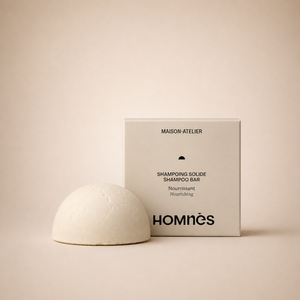
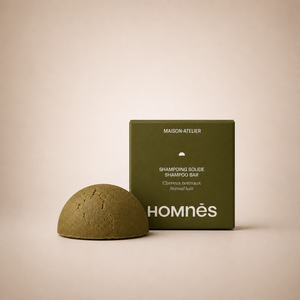
This is the formula of our nourishing solid shampoo: shea, coconut, glycerin and D-panthenol, with a gentle, sulfate-free surfactant. It is designed for dry hair and scalps that feel tight.
Dry hair: which everyday habits help?
- Do not wash your hair too often, so sebum can nourish the fibre naturally.
- Apply conditioner to the ends only, where hair is driest. Our solid conditioner with silk protein detangles and softens without weighing hair down.
- Rinse with lukewarm rather than hot water.
- Dry gently: press the lengths in a towel without rubbing, and limit hairdryer heat.
- Detangle with the right tool, starting at the ends. Our guide to choosing the right brush or comb helps you find the one for you.
- Space out colouring and heated tools whenever possible.
You will find more advice in how to wash your hair properly, and in our article on dry hair after summer.
Frequently asked questions
Should you wash dry hair less often?
Generally, yes. Washing too often removes the sebum that protects the fibre. Find the rhythm that suits you, with a gentle shampoo.
Is a shampoo enough to repair dry hair?
Shampoo is the foundation, but conditioner on the ends and gentler habits (less heat, careful detangling) make a big difference.
How can I tell whether it is my hair or my scalp that is dry?
The two often go together, but not always. Our online hair diagnosis helps you tell the difference and choose the right care.
Want to know more about us? Discover the Homnès Maison-Atelier.